This page covers who holds BN(O) status and what the February 2026 expansion changed, what you are free to do on the visa, whether to take the shorter or the longer grant, how the “5+1” route works, where the 2026 settlement reforms leave it, and exactly how mortgage lenders assess a BNO application.
Understanding the BNO visa
Who holds BN(O) status and who the February 2026 expansion brought in, what you are free to do on the visa, whether to take the shorter or the longer grant, and why this route’s five-year settlement clock survived the 2026 reforms intact.
What is the BNO visa?
The BNO visa lets British National (Overseas) status holders — a form of British nationality available to people who registered before Hong Kong’s handover in 1997 — and their eligible family members live, work and study in the UK, with a clear path to settlement and British citizenship at the end of it. It is not a work visa. There is no employer behind it, no occupation code, and nothing to lose by changing jobs, which turns out to matter a great deal once a mortgage lender is assessing you.
Who is eligible?
Updated Route expanded to adult children born on or after 1 July 1979
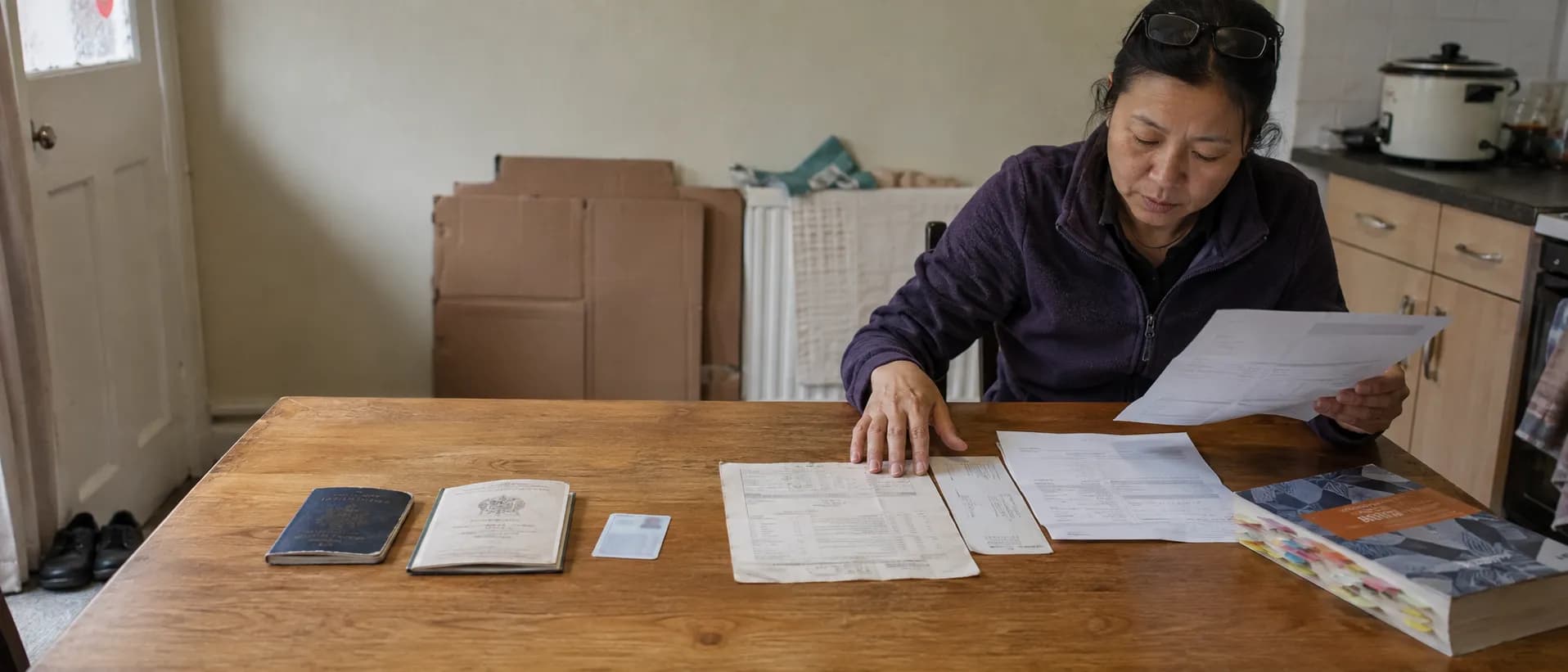
- BN(O) status. An expired BNO passport, or your original certificate of registration, is sufficient evidence — you do not need a currently valid BNO passport
- Adult children of a BN(O) status holder, or of their partner, can apply independently if they are 18 or over and born on or after 1 July 1979 — the group the February 2026 expansion brought in
- Partners and children of an eligible applicant can apply alongside them, and adult children applying independently can bring their own partner and children
- Permanent residence in Hong Kong, if you are applying from outside the UK
- No job offer, no sponsor and no minimum salary at any point in the application
What changed in February 2026
Before February 2026, an adult child could only apply independently if they were born on or after 1 July 1997 — so families split, with some children eligible and their older siblings not. The expansion moved that cutoff back eighteen years, to 1 July 1979, which brings in everyone who was under 18 at the handover. If you were told you did not qualify before, this is worth re-checking.
What can you do on this visa?
You can work in any job, be self-employed, or study, with no restriction to a single employer, sector or role. You get NHS access through the Immigration Health Surcharge, which you pay up front when you apply. What you do not get, until you reach settlement, is recourse to public funds.
“No recourse to public funds”, in practice
No recourse to public funds means most benefits, tax credits and housing assistance are closed to you while you are on the visa. It does not affect your right to work, your NHS access, your children’s state schooling — or your ability to get a mortgage, since a mortgage is assessed on income rather than entitlement. The condition falls away when you reach Indefinite Leave to Remain.
Free · 60 seconds
Check what you could borrow in 60 seconds
Answer eight questions and see an instant estimate based on your visa, your income and your deposit.
How long does it last — 30 months or 5 years?
You choose at the point of application. Both grants lead to the same place and both count toward the same five years; what differs is how often you deal with the Home Office, what you pay and when, and how much permission you have left on the day a lender looks at you.
2 years and 6 months
The shorter grant. Less to pay at the point you are also paying for flights, shipping and a rental deposit — at the cost of going back round the application twice.
- What you get
- 30 months of permission, extendable from inside the UK as many times as you need.
- Counts toward settlement
- Yes, in full. Time on a 30-month grant is worth exactly the same as time on a five-year one.
- What you pay, and when
- A smaller amount up front, twice — the application fee and the health surcharge each cover only the period the grant runs for.
- What it means for a mortgage
- Your remaining permission drops under the 12 months many lenders like to see roughly every two years, so it is worth applying earlier in a grant than later.
5 years
The longer grant. One application, one surcharge payment, and enough permission on the clock to take you to the point you can apply to settle.
- What you get
- Five years of permission in a single grant, with no extension needed before you reach ILR.
- Counts toward settlement
- Yes. The grant and the qualifying period run to the same five years, so they end together.
- What you pay, and when
- More up front, once — the health surcharge for all five years is paid with the application.
- What it means for a mortgage
- You clear most lenders’ remaining-visa criteria comfortably for the first few years, which is the widest window this route offers.
What’s the route to settlement? The “5+1”
This is the BNO route’s biggest advantage, and the reason it is one of the more straightforward categories to mortgage. After five continuous years of residence you can apply for Indefinite Leave to Remain. One year after that you become eligible to apply for British citizenship — which is why the route is universally called “5+1”.
- Yr 0–5
Five continuous years of residence
The qualifying period for Indefinite Leave to Remain. Time on a 30-month grant and time on a five-year grant count identically, and you can extend as often as you need to reach the end of it. The one thing that can break the clock is absence: no more than 180 days outside the UK in any rolling 12-month period.
- Yr 5–6
The waiting year before citizenship
Once ILR is granted you hold settled status with no time limit on it, and the no-recourse-to-public-funds condition falls away. British citizenship opens twelve months later — the “+1” — and that is the point most people on this route are actually aiming at.
Key dates
- Yr 5Indefinite Leave to Remain — the end of the qualifying period, and the end of the visa
- Yr 6Eligible to apply for British citizenship
What Indefinite Leave to Remain asks of you at the end of those five years:
- Five continuous years of residence in the UK on the route
- No more than 180 days spent outside the UK in any rolling 12-month period during those years
- The Life in the UK test, if you are aged 18 to 64
- English language ability at CEFR level B1 — rising to B2 for applications made from 26 March 2027
- The good character requirement
- From 8 October 2026, a child under 18 can settle alongside you without five years of residence of their own
Is the 5-year path protected under the 2026 reforms?
This is the question that decides whether a 25-year commitment makes sense, so it is worth being precise rather than reassuring. The 2026 earned-settlement reforms raise the standard qualifying period for settlement to ten years across most of the immigration system. The BNO route does not go with them.
Five years
BN(O) visa holders
The Home Office confirmed on 9 February 2026 that Hongkongers will retain a five-year pathway to permanent settlement. Under the earned-settlement framework this arrives as a five-year reduction from the new baseline rather than an exemption from the framework itself — the mechanism changed, the five years did not.
Ten years
Most other migrants
The reforms set a new standard baseline of ten years’ residence before settlement, phased in from 2026. That gap — five years against ten — is a large part of why lenders read this route as the more settled one.
A shorter qualifying period is not a lighter one. Every mandatory requirement above still applies in full, and the English language bar rises from B1 to B2 for applications made from 26 March 2027. Confirm the current position on gov.uk before you plan around a date.
Getting a mortgage on a BNO visa
Why lenders read a protected settlement path as stability, what a thin UK credit file actually costs you, how to evidence a deposit that started in a Hong Kong bank account, and the questions we field most often from newly arrived households.
Can I get a mortgage on a BNO visa?
Yes. Lenders read the BNO route’s five-year path to settlement, followed by British citizenship, as a strong signal that you are staying — and a number of them now have criteria written around this route specifically, given how many Hongkongers have arrived on it. Whether you landed last month and are building a UK credit file from nothing, or you are three years in with an established job, there is a lender on our panel suited to your stage. The two things that decide which one is your UK history and your deposit’s paper trail.
What matters most to lenders on this route
- Where your income comes from — a new UK job, savings brought over from Hong Kong, or a mix of the two
- Your UK credit history, or for very recent arrivals, alternative evidence of financial reliability
- How long you have been here — most lenders want at least 3–6 months of UK income and bank statements behind you
- A clear, documented paper trail for any deposit funds transferred from Hong Kong
- How much of your visa has left to run — though this weighs lighter here than on sponsored routes, because your extension does not depend on an employer keeping you on
How much can I borrow?
Standard affordability multiples of 4–4.5× income apply, the same as they would for a British citizen in the same job — this route carries no penalty for being a visa. If part of your income is still earned overseas, or your UK credit file is thin, some specialist lenders will look past both and weigh international income and savings history instead. That is a smaller pool of lenders rather than a closed door, and it is the part of the market a broker is actually useful for. Use our eligibility calculator for an estimate against your own income and deposit.
Bringing your deposit over from Hong Kong
This is the part of a BNO application that is genuinely unlike every other route on this site, and it is where applications stall. There is nothing irregular about a deposit that started in a Hong Kong bank account — it is accepted in most cases. What UK anti-money-laundering rules ask is that you can show, without gaps, where the money came from and how it got here.
Where the money came from
The origin needs to be a named, evidenced event rather than a balance that simply exists — salary and bonuses, the sale of a Hong Kong property, a matured investment, or an MPF withdrawal on leaving.
- Hong Kong bank statements
- Sale completion papers
- MPF withdrawal statement
Where it was held before it moved
Your lender and your conveyancer both want to see the balance sitting in an account in your own name for a period beforehand, rather than appearing days before the transfer.
- Six months of statements
- Account in your own name
The transfer itself
Move the money between accounts you own, in traceable steps. Funds routed through a relative, a friend, or an informal exchange service are the single most common reason a deposit gets queried — even when everyone involved is entirely legitimate.
- Remittance advice
- Exchange confirmation
- Dated transfer records
Where it landed in the UK
The credit has to be visible in the UK account the deposit will actually be paid from, and it has to reconcile against the amount that left Hong Kong.
- UK bank statements
- Matching credit entry
A gap anywhere in the chain stalls the whole application, not only the link it sits on — and it is far cheaper to assemble this before you make an offer than to reconstruct it from Hong Kong against a completion deadline. A gifted deposit needs the same trail from whoever gifted it, plus a letter confirming it is a gift rather than a loan.
Documents you’ll need
- Passport, and your BNO visa confirmation — a BRP or an eVisa share code
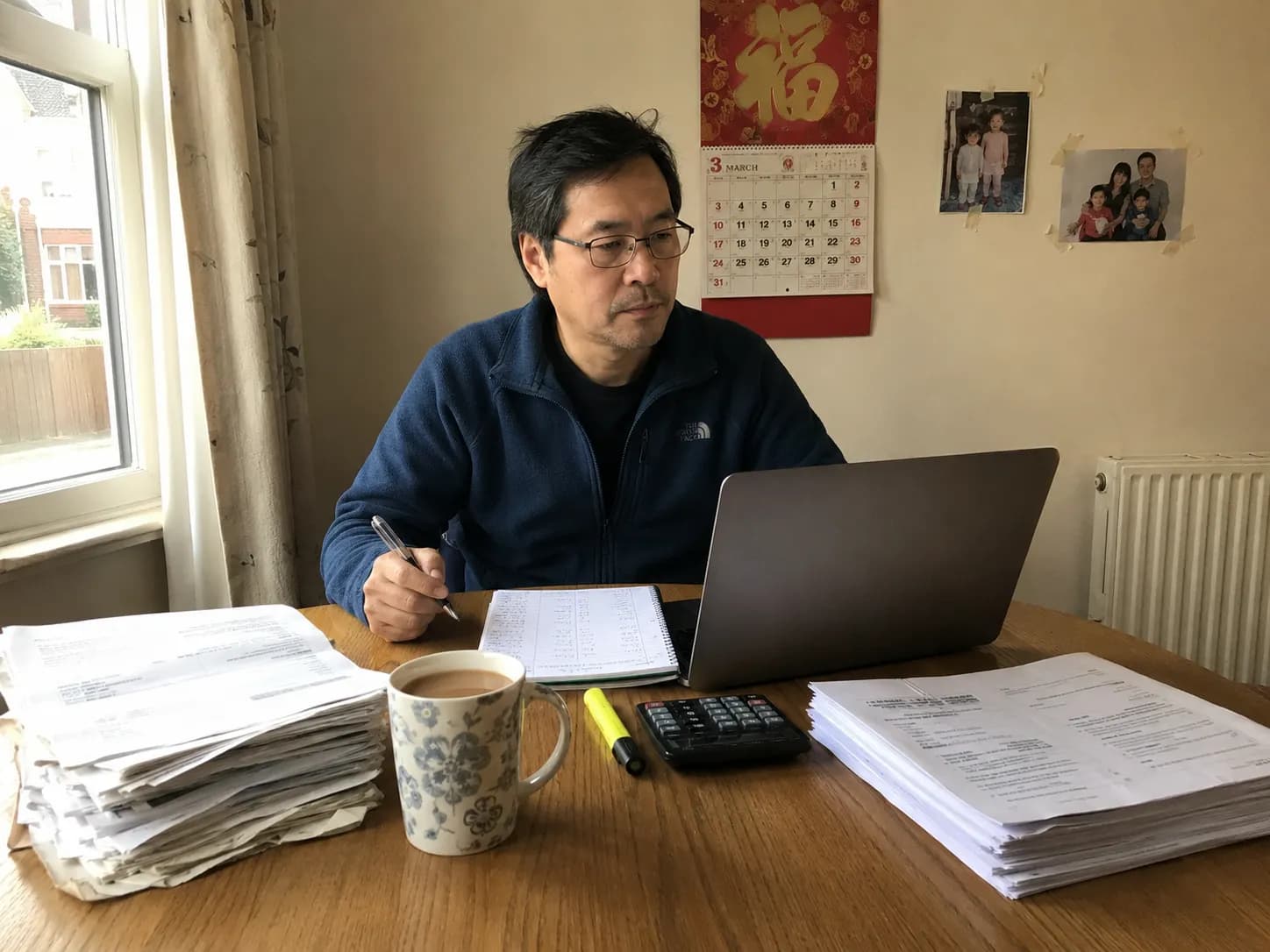
- 3–6 months of UK payslips, or overseas equivalents if you have only recently arrived
- 3–6 months of UK bank statements
- Proof of deposit, with the paper trail above for anything transferred from Hong Kong
- Your UK credit report — check yours with checkmyfile(opens in a new tab)
Common challenges — and how we solve them
“I have no UK credit history.”
Several lenders on our panel specialise in “credit invisible” applicants, which describes almost every household in its first year here, and assess alternative evidence of financial reliability rather than a file that does not exist yet. Registering to vote at your UK address and running a UK current account both start the file moving in the meantime.
“My deposit is coming from savings in Hong Kong.”
Acceptable in most cases, provided you can show a clear audit trail confirming the source of the funds under UK anti-money-laundering rules. The chain above is what that means in practice — assemble it before you make an offer, not under a completion deadline.
“I’ve only been in the UK a few months.”
There is no fixed waiting period, though most lenders want to see at least 3–6 months of UK income and bank statements first. Tell us when you landed and we will tell you which lenders are open to you at the stage you are actually at, rather than let you apply early and collect a decline that then sits on your file.
Frequently Asked Questions
Can I get a mortgage with no UK credit history on a BNO visa?
Yes. Several lenders on our panel specialise in cases with limited or no UK credit history, which is common among newly arrived BNO visa holders, and use alternative evidence of financial reliability instead.
Can I use savings transferred from Hong Kong as my mortgage deposit?
Yes, though you will need to show a clear audit trail of where the funds came from, in line with UK anti-money-laundering requirements. In practice that means evidence of the original source, where the money was held beforehand, the transfer itself, and the credit landing in your UK account.
How long until I can apply for Indefinite Leave to Remain on a BNO visa?
After five continuous years of residence on the route. This is known as the “5+1” route, because you become eligible to apply for British citizenship one year after receiving ILR. The Home Office confirmed on 9 February 2026 that BN(O) visa holders keep this five-year pathway while the standard baseline for most other routes rises to ten years.
Do I need a currently valid BNO passport to apply for the visa?
No. An expired BNO passport, or your original certificate of registration, is sufficient evidence of your BN(O) status.
How soon after arriving in the UK can I apply for a mortgage on a BNO visa?
There is no fixed waiting period, though most lenders want to see at least three to six months of UK income and bank statements first.
Still have a question? Read our full FAQs or ask us directly.
Further reading
Sources
- gov.uk — British National (Overseas) visa
- gov.uk — BN(O) visa: settle in the UK
- gov.uk — Hong Kongers offered new lives as UK expands safe and legal routes (9 February 2026)
- gov.uk — Immigration Rules Appendix Hong Kong British National (Overseas)
- gov.uk — Statement of changes to the Immigration Rules: HC 584